
The Dachshund is a small scent hound that was bred for hunting. They are also known as Sausage Dogs and Badger Dogs, which is the German translation of Dachshund.
Physical Characteristics
Dachshunds are bred in two sizes: the standard Dachshund, which was originally bred to hunt badgers, and the miniature Dachshund, which was bred to hunt rabbits.
There are three coat types of Dachshunds.
- Smooth-haired
- Wirehaired
- Longhaired.
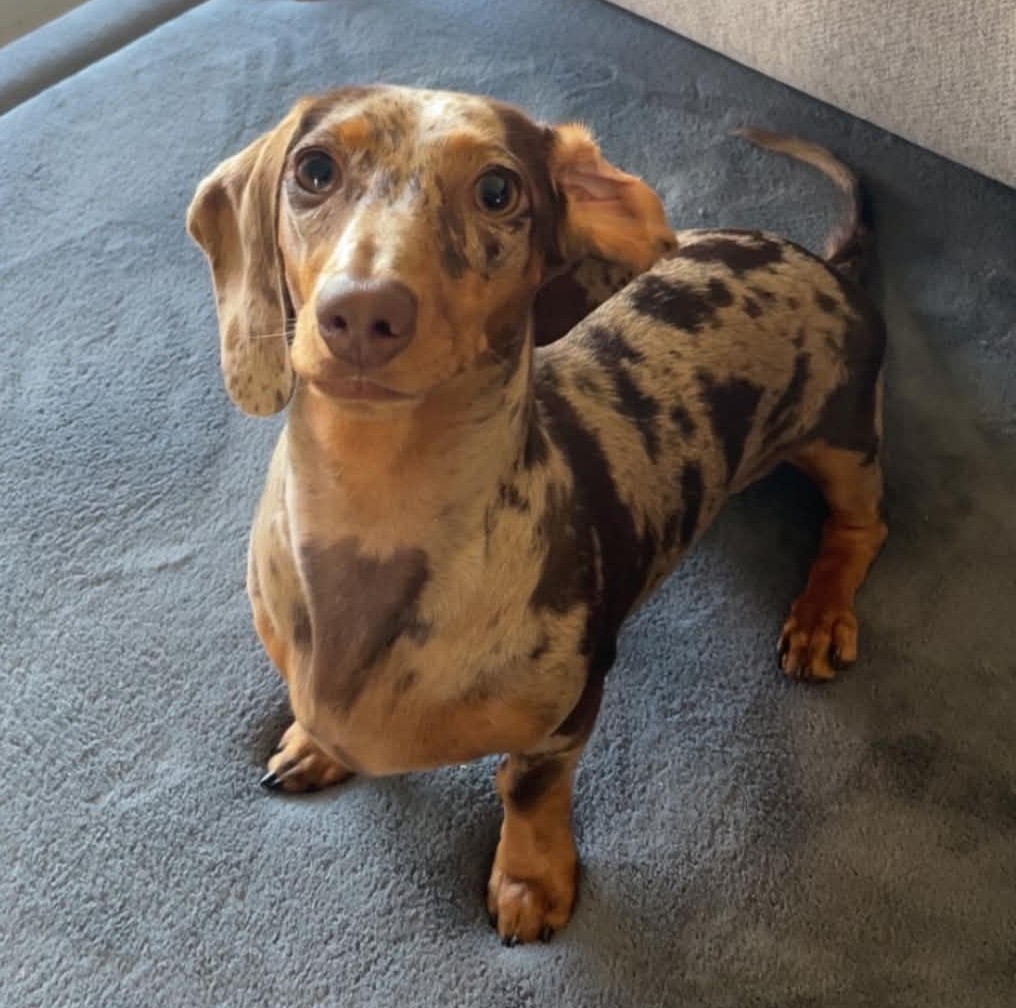
They have a variety of colours: black and tan, brown, red and dappled, which is a combination of colours and is a result of the Merle gene being inherited, like some Border Collies and Australian Shepherds. The breed is mostly recognised as black and tan.
They are small in stature with long bodies and short legs, which gave them the advantage of being a shape and size to follow a scent into burrows.
Temperament
This intelligent little dog has a lively and loyal temperament. The breed can be focused, attentive and feisty at times. For their size, they can show courage and determination in protecting themselves, especially if they are in a trusted pack.
They can be stubborn, sometimes fussy and if not well socialised with good guidance, they can be nervous, mistrusting and tentative around strangers, using their bark and body language to ward off unwanted attention.
They can be reluctant to interact with strangers until they get to know and trust them. Once you have proved yourself to be a trustworthy friend, they will be confident and happy to seek affection.
Breed Traits
The Dachshund has a high prey drive and may instinctively chase small animals, so care must be taken on walks and with off lead exercise in appropriate areas where they don’t have the chance to chase when they pick up an enticing scent.
This breed tends to be alert and brave, their hunting instincts can make them watchful and fearless, regardless of their small stature.
Training
As Dachshunds are originally a working breed, they need to be given good mental stimulation and regular physical exercise that is safe and appropriate for their physical attributes and size.
Dachshunds are intelligent little dogs and with steady, consistent guidance they can be taught to be calm, confident, attentive and responsive to their humans. When their families provide clear leadership and encourage the behaviours they want repeated, these dogs flourish. If their human family members don’t provide calm leadership and consistent guidance, this breed can take matters into their own paws and make decisions to protect themselves and their homes and family members.
As they are alert and protective, care must be taken not to give the Dachshund a vantage point in their home to guard at windows, where they can quickly learn to bark at passers-by and successfully, in their view, ‘chase them away’. This practice can encourage guarding and over-protective behaviour and it can cause the dog to be anxious or objectional to visitors or passers-by.
Behaviour Problems
Without good consistent guidance, training and socialisation, this little dog can be mistrusting and have a strong pack instinct. When they feel the need to be protective, they can easily forget their small size and confidently chase off what they perceive to be a threat.
They can also lack confidence and suffer separation anxiety, if they are not shown that they are safe and that their human companion is their guardian and protector. A timid Dachshund can be reluctant to venture out on walks and be very wary of strangers. They need good, sensible boundaries and regular safe, enjoyable routines to help build their confidence, to understand that they don’t have a responsibility to protect themselves or their family and not be suspicious of anything that is unusual to them.
As Dachshunds are a small, cute dog, there is a common tendency for human companions to baby them, treating them like a lap dog and not appreciating that this dog has breed instincts and needs mental and appropriate physical enrichment for their size and shape. This type of relationship can result in the dog lacking experience of coping with the world and be less confident, not taking things in their stride too well.
Socialisation
As Dachshunds are comfortable being in a pack, they can be socialised easily. This should start when they are young, ideally before they experience any negative interactions that may shape their perceptions of the world. Socialisation should be rehearsed in a safe environment with good supervision and positive encouragement and praise when they calmly accept the presence of other dogs, humans and other animals in a relaxed and friendly way. They should not be overwhelmed during initial socialisation training by not being forced to interact with a large group of off lead dogs at the same time, as this can be overwhelming.
History
The Dachshund can be traced back to 15th century Germany. Remains of dogs resembling this breed were excavated in Roman settlements in Germany, however, dogs of a similar shape and size have also been found depicted on the walls of ancient Egyptian Temples. Sculptures of dogs resembling Dachshunds have also been found as far afield as Peru, Mexico, Greece and China.
It is believed that Dachshunds were bred from a variety of hounds and terriers, including the German Shorthaired Pointer, the Pinscher, and the Bracke.
Dachshunds have been popular pets for centuries, and they have been owned by many famous people, including Queen Victoria, Pablo Picasso, and Andy Warhol.
Physical Attributes and Health Issues
Dachshunds have good stamina and are physically strong dogs. Despite their long bodies, they can be fearless when jumping around onto various levels and terrain.
Due to their body length, they are prone to slipped discs in their vertebrae, so they should not be encouraged to jump up and down to their humans or onto furniture. There are many excellent aids for enabling small dogs to safely gain access to furniture and into and out of cars without needing to jump.
If a Dachshund injures their back, this can result in the need for surgery and a careful recovery time. Keeping a lively and inquisitive Dachshund still during post operative recouperation can be a challenge!
It is important not to overfeed as it can lead to obesity. Obesity of a small dog with a long body, can put extra strain on their long spine and short limbs, so it is important to maintain a healthy weight by a controlled and healthy diet, with the right amount of exercise for their size and breed.